
$22.00
Add to Cart
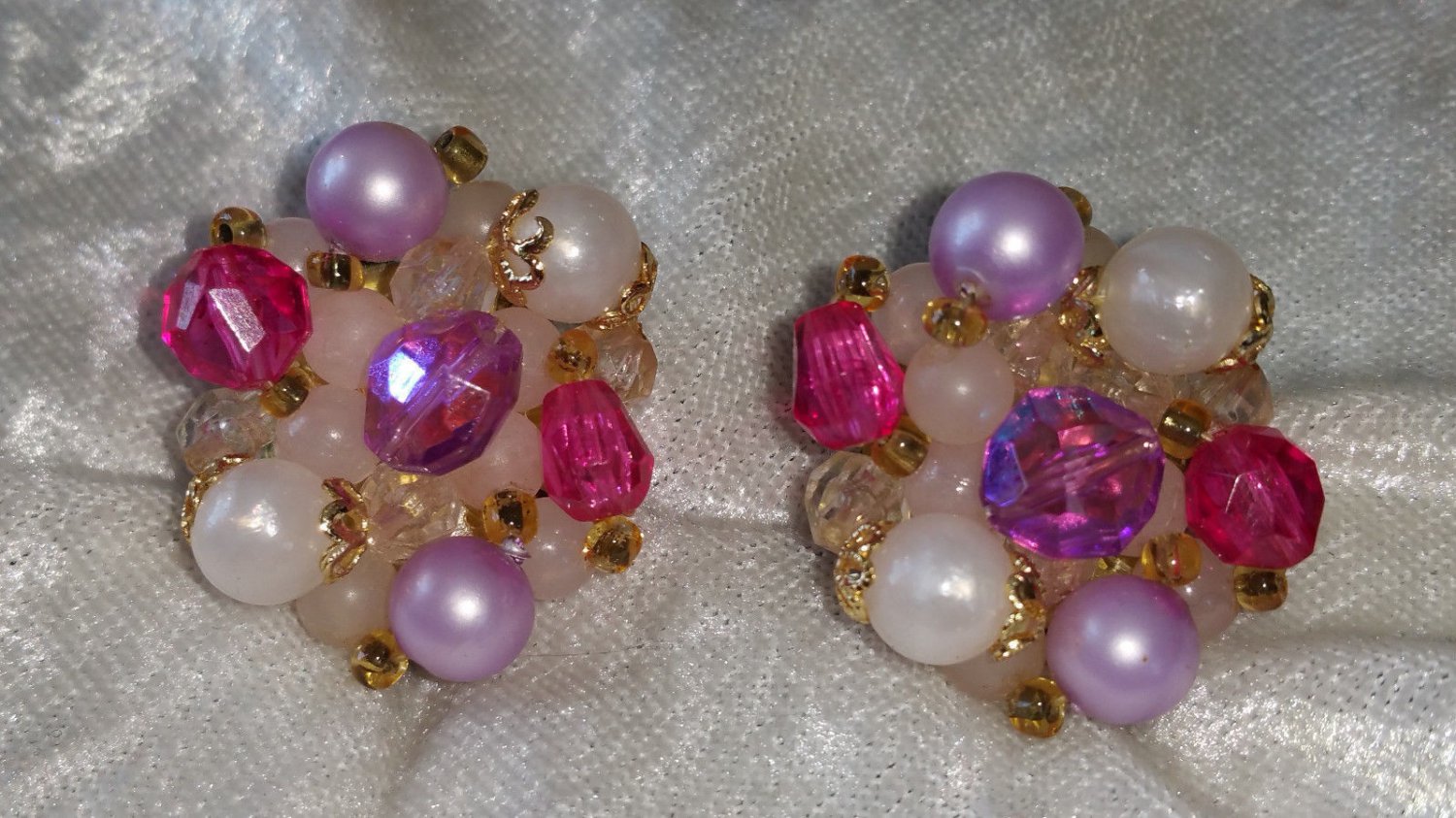
Signed Germany earrings clip on Pink Purple white stones different collectable
Only 1 available
Details
Shipping: US-Mainland: free (more destinations)
Condition: Used
*The store has not been updated recently. You may want to contact the merchant to confirm the availability of the product.


Signed Germany earrings clip on Pink Purple white stones different collectable Thank you for looking at my listing, OMG this is beautiful piece of Jewelry. If you walked into an antique jewelry store you would pay so much more for this item! Someone once commented on my jewelry it’s “SO DOWNTON ABBEY” This is elegant, it’s a simple but timeless design, Signed Germany earrings clip on Pink Purple white stones different very collectable It’s much stunning cuter in person, Lets stroll down memory lane. Makes you wonder who wore it, what was it given to them for? What is the history behind this piece? This would look great on any jacket; blouse even a hat or pocketbook! I do not know the age of this item but I do know I bought it at an estate sale in the 1980’s. Great for anyone’s collection. The earrings are approx. 1 1/2” round. Please make sure to super size the pictures to see the “age spots”! We all have age spots at this age! WEST GERMANY, GERMANY & EAST GERMANY: 1871 - Present The German Empire originated in 1871 and was called Germany through 1948 (after Word War II) when in 1949, it split to West and East Germany. West Germany, the U.S. British and French Zones of Occupation became the Federal Republic of Germany with Bonn as its capital. East Germany (the Soviet zone), West Berlin (the western sectors) and East Berlin (the Eastern sector) became known as the German Democratic Republic (a socialist state) comprising the provinces of eastern Pomerania, eastern Brandenburg, Silesia, and East and West Prussia with its capital Berlin. In October 1990, East and West Germany unified again, and the country is now known as Germany. Items produced including costume jewelry made before and up through 1948 are marked: “Germany”. Those made in 1949 from West Germany were marked: “Western Zone Germany“, “American Zone Germany“, “W. Germany“, “West Germany”, “Made in West Germany”, and “Made in Western Germany”. In East Germany, items were marked: “German Democratic Republic”. To sum, jewelry pieces marked just “Germany” were almost certain to be pre-WWII unless they are newer (1990 - Present). The German costume jewelry styles designed and manufactured in the Art Nouveau (poetic interpretation of nature 1890-1915) and Art Deco (geometric figures and symmetrical forms 1919-1930) include necklaces, bracelets, brooches/pins, earrings, pendants. medallions, and rings started in 1903. Sterling silver, silver-tone, gold-tone, rhodium, brass, chromium, filigree, and white base metals were used along with imitation stones of turquoise, amethyst, emerald, opal, ruby, topaz, lapis, and pearl (to name a few), clear and multi colored crystals, rhinestones, lampwork beads, crackle glass and art glass beads. Matching sets of pendants and medallions consisting of a necklace, earrings and bracelet with Cameos of ladies and flowers surrounded by delicate pearls and rhinestones on filigree gold-tone and silver-tone metal enameled were also designed and produced in West Germany and Germany. The European country, by hand, created exceptional examples of costume jewelry. The costume jewelry, the old style designs of Germany and West Germany, were probably produced in the 1920’s through the 1950’s, and were similar to those of Miriam Haskell, Original by Robert, Stanley Hagler and De Mario. Costume jewelry made in West Germany is becoming scarce and hard to find. PAYMENT MUST BE MADE 3 DAYS AFTER THE SALE IS OVER ONCE ITEM IS PAID FOR I SEND OUT THE PACKAGE THAT DAY OR THE NEXT BUSINESS DAY. PLEASE DO NOT HOLD ME RESPONSIBLE FOR THE POST OFFICE. I SHIP OUT RIGHT AWAY THEY ARE THE SLOW ONES. I THINK THEY HAVE A PICTURE OF ME AT EACH POST OFFICE AND SAY SLOW THIS GUYS STUFF DOWN LOL.


